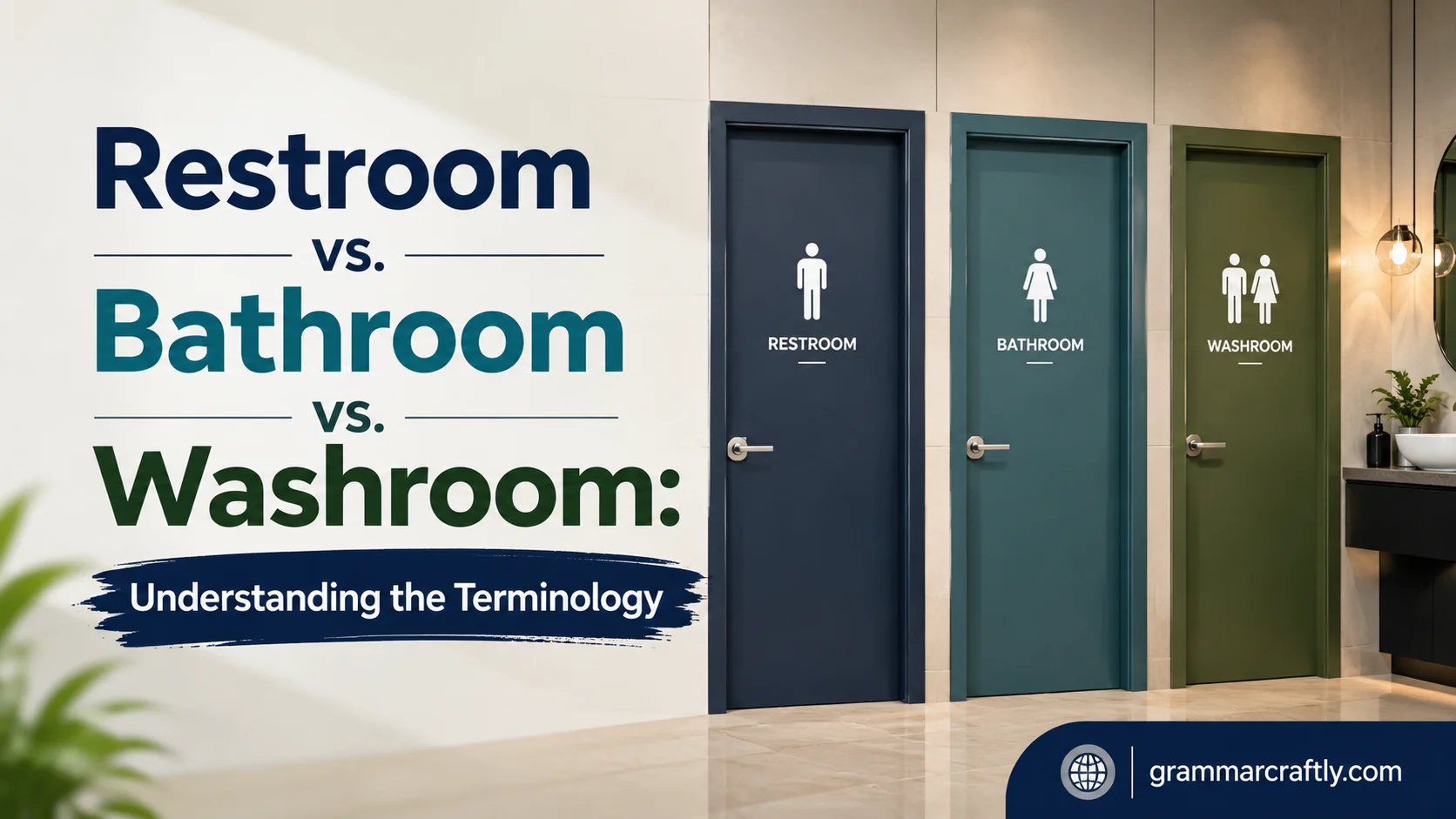
Travelers face confusion using restroom bathroom washroom in public signs now Restroom vs. Bathroom vs. Washroom: Understanding the Terminology
In communication, people often mix Restroom, Bathroom, and Washroom, especially across traveling between Canada and United States and comparing British English with American English. In public places like malls, restaurants, airports, offices, and buildings, the signs show different terminology, but all point to hygiene facilities, toilets, sanitation, and cleanliness. These differences come from regional differences, cultural norms, laws, and naming convention, which shape how North American speakers and English learners understand the correct term in each situation. This creates natural confusion in everyday language, especially for travelers moving through official complexes and public spaces.
At home in homes, people usually prefer bathroom usage, even when there is only a private room with showers, bathtub, or simple washing hands area for personal cleaning and freshen. In formal blunt terms, WC or lavatory is common in British English, while American English uses restroom in public restroom contexts. Across everyday life, whether in business, offices, or public spaces, the essential purpose stays the same: providing comfort, relaxation, and necessities. This shared bathroom terminology and washroom terminology reflects how writers, users, and English learners adapt vocabulary, shaped by customs, structure, and preference across different types of bathrooms.
Why Bathroom, Restroom, Washroom Differences Confuse So Many Travelers
Language around toilets sounds simple until you cross borders. Then it turns into a puzzle.
In the United States, people say “restroom.” In the UK, “toilet” is normal. In Canada, “washroom” dominates. Meanwhile, most of Europe leans on “WC,” short for water closet, a term that feels oddly formal for something so basic.
The problem isn’t intelligence. It’s context.
Different countries shaped restroom language based on:
- Cultural comfort with direct words
- Historical plumbing terms
- Public signage systems
- Social politeness norms
For example, in the US, saying “toilet” in public can sound blunt. In the UK, it sounds completely normal. That shift alone confuses millions of travelers every year.
A simple question like “Where is the bathroom?” can work in one country and feel strange in another.
A World Map of Bathroom, Restroom, Washroom Differences
Let’s break this down clearly so you can use it on the go.
| Region | Common Term | What You Should Say | Sign You’ll See |
| United States | Restroom / Bathroom | “Where is the restroom?” | RESTROOM / RR |
| Canada | Washroom | “Where is the washroom?” | WASHROOM |
| United Kingdom | Toilet / Loo | “Where is the toilet?” | TOILETS / WC |
| Europe (general) | WC | “Where is the WC?” | WC |
| Australia | Toilet | “Where is the toilet?” | TOILET |
| Japan | Toire (トイレ) | “Toire?” or gesture | 🚻 symbol + トイレ |
One interesting detail: the international symbol 🚻 often saves you when words fail completely.
If you remember nothing else, remember this:
Signs matter more than words.
Historical Roots Behind Bathroom Language
The words we use today didn’t appear randomly. They evolved with plumbing systems and social etiquette.
Bathroom
Originally meant a room with a bath. In older homes, bathrooms weren’t primarily about toilets at all.
Restroom
This term gained popularity in the US in the early 1900s. Public places wanted a polite word that avoided mentioning bodily functions directly.
Washroom
Canada preferred a neutral, clean-sounding term focused on hygiene rather than function.
WC (Water Closet)
A direct reference to early indoor plumbing systems in Europe.
A linguist once described it like this:
“Bathroom language is less about plumbing and more about politeness shaped by culture.”
That explains why no global standard exists.
Airport and Public Sign Decoding Guide
Airports are the safest places to practice reading restroom signs, but they also introduce the most variations.
You might see:
- RESTROOM
- TOILETS
- WC
- LAVATORY
- GENTS / LADIES
- ALL GENDER
Let’s decode them quickly.
Lavatory
Common on airplanes and older buildings. It simply means toilet facility.
Gents / Ladies
Traditional gender separation signs.
All Gender
A modern inclusive option designed for accessibility and safety.
Public Convenience
Common in parts of South Asia and the UK. It simply means public restroom.
Real Travel Confusion Stories That Actually Happen
Language confusion around bathrooms creates some surprisingly funny moments.
Case Study: The “WC Panic” in Paris
A tourist in Paris once spent 15 minutes searching for a “bathroom” sign in a café. The sign said “WC,” but they ignored it because it sounded too technical.
They later admitted they almost left the café in panic before a staff member pointed it out.
Case Study: The Canadian “Washroom” Surprise
An American traveler in Toronto asked for the “restroom” and received confused looks. When they switched to “washroom,” everything clicked instantly.
The difference was just one word.
Case Study: The Silent Airport Dance
At Istanbul Airport, a traveler used hand gestures instead of words and still got directed correctly. The staff simply pointed to a 🚻 icon.
This shows something important:
Body language often works better than vocabulary.
How Locals Actually Ask for Bathrooms
You don’t always need perfect grammar. In fact, locals rarely use full sentences.
Here’s what people actually say:
- “Toilet?”
- “WC?”
- “Where?”
- “Bathroom?”
In fast situations, tone and pointing matter more than structure.
Think of it like a universal shortcut system. Humans simplify language when urgency kicks in.
Gender-Neutral and Inclusive Bathroom Language Explained
Modern public spaces increasingly use inclusive restroom design.
What “All Gender” means
It means anyone can use the restroom regardless of gender identity. These facilities often:
- Have fully enclosed stalls
- Use shared sink areas
- Increase accessibility for families and caregivers
Why it matters
Cities like New York, Berlin, and Tokyo have expanded inclusive restrooms to reduce:
- Waiting lines
- Safety concerns
- Accessibility barriers
A report from UN Habitat (2024) highlights that inclusive restroom design improves public space usability by up to 22% in high-traffic areas.
That’s not just social change. It’s practical design.
Bathroom Etiquette Around the World
Understanding bathroom etiquette prevents awkward moments.
Common global expectations
- Keep noise minimal
- Queue properly
- Leave the space clean
But cultural differences still exist.
Examples
Japan
- Extreme cleanliness expectations
- Many restrooms include slippers for toilet areas
- Silence is preferred
United States
- Emphasis on privacy
- Large stall gaps are common in older buildings
Europe
- Pay-to-use public toilets are common
- Attendants may maintain cleanliness
Middle East
- Water-based cleaning systems are common
- Toilet paper may not always be the primary option
Hygiene Systems: Why They Differ So Much
Bathroom design reflects hygiene philosophy.
| Region | Common Cleaning Method | Notes |
| US | Toilet paper | Standard system |
| Japan | Bidet toilets | High-tech cleaning systems |
| Middle East | Water spray / bidet | Strong cultural preference |
| Europe | Mixed systems | Depends on country |
A sanitation researcher once said:
“Bathroom design reflects how a culture defines cleanliness itself.”
That’s why no single global system exists.
Maintenance and Cleanliness Standards in Public Restrooms
Clean bathrooms don’t happen by accident. They rely on systems.
High-traffic restroom maintenance includes:
- Cleaning every 30–90 minutes in airports
- Automated sensor flushing systems
- Odor control ventilation systems
- Touchless faucets and doors
Modern malls in cities like Singapore use AI-assisted monitoring that alerts staff when supplies run low.
This reduces complaints by nearly 40% in some commercial buildings (industry reports, 2025).
Etiquette Tips You Should Actually Follow
Let’s keep this practical.
Do this:
- Wash hands properly (at least 20 seconds)
- Respect queues
- Use bins when provided
- Keep your phone usage minimal
Avoid this:
- Blocking multiple stalls
- Leaving water mess on sinks
- Ignoring directional signs
- Rushing without checking occupancy indicators
Think of it like shared etiquette in a tiny public room. Respect makes everything smoother.
Why Bathroom Signs Use Symbols Instead of Words
Symbols work faster than language.
The 🚻 icon exists because:
- It avoids translation issues
- It is instantly recognizable
- It works under urgency
Even people who cannot read local language still understand it instantly.
That’s powerful design thinking.
Practical Survival Cheat Sheet
Here’s your quick reference guide for travel:
If you don’t know the word:
- Look for 🚻 symbol
- Follow arrows
- Ask “toilet?” or “WC?”
- Use gestures if needed
If you want to sound local:
- US → restroom
- UK → toilet
- Canada → washroom
- Europe → WC
Read More: Shed Some Light On – Definition, Meaning, and Examples
Why Understanding Bathroom Language Actually Matters
It might sound minor, but it affects:
- Travel comfort
- Stress levels
- Social confidence
- Time efficiency
Few things are more stressful than needing a restroom and not knowing what word to use.
Once you understand bathroom, restroom, washroom differences, you stop guessing. You start navigating.
That’s the real win.
Final Thoughts: Language Meets Survival Instinct
Bathroom vocabulary isn’t just language. It’s a practical life tool.
Every country builds its own version based on history, culture, and design choices. Once you understand that, confusion drops dramatically.
Next time you travel, don’t overthink it. Follow the signs, trust the symbols, and remember that most people around the world are solving the same problem you are.
They just use different words for it.