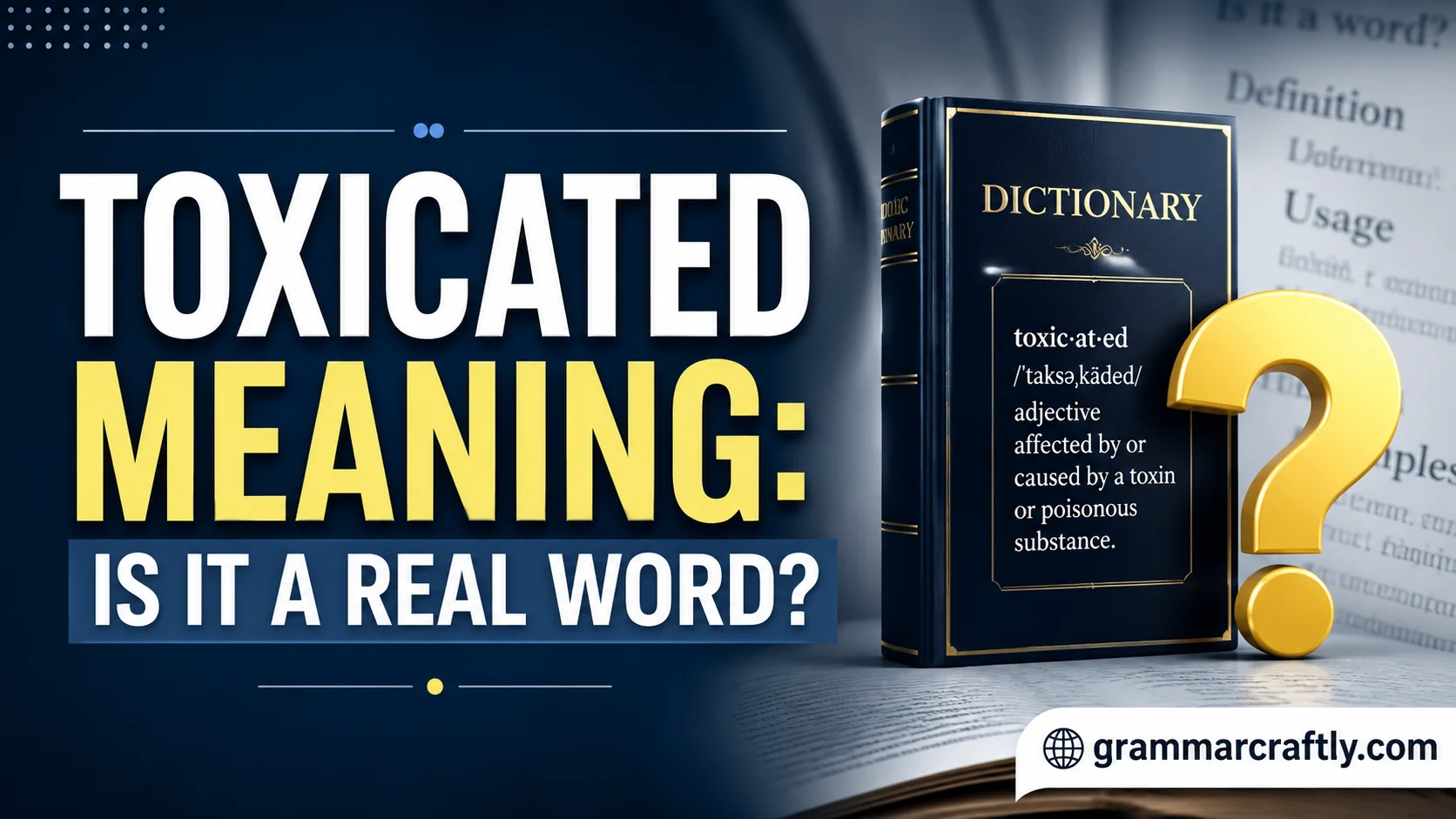
If you’re curious about Toxicated, this guide explains its definition, meaning, and examples while showing how it relates to English usage.
The Toxicated Meaning: Is It a Real Word? question often appears when learners come across this interesting and familiar word while learning English. Toxicated seems connected to toxic, toxicity, and intoxicated, but English can be tricky, and similar words don’t always share the same meaning. In real-life usage, Toxicated is a less common form that some people use when they mean intoxicated. The term may describe someone affected by alcohol, drugs, or other substances that impair mental and physical abilities, affect behavior, and alter the ability to think clearly and make rational decisions.
From my experience, understanding this term is essential for native speakers, learners, and anyone curious about natural English and real-life usage. The main difference is that intoxicated is the right word in standard English, while Toxicated may appear in casual writing, online discussions, creative contexts, or informal conversation. It isn’t commonly accepted as a standard English word, so understanding the distinction can improve writing, communication, comprehension, and clarity, while helping you avoid mistakes and misunderstandings. Paying attention to context, language, expression, grammar, and syntax ensures proper understanding. Describing someone’s state in everyday life, education, or a practical application may require careful word choice, especially when an article highlights legal or illegal effects, substance use, functioning, and well-being.
“Let’s dive in”
What Does Toxicated Mean?
The word toxicated is generally understood as meaning affected by a toxin or harmful substance. However, this usage is extremely uncommon in modern standard English.
The confusion comes from the word’s structure. Many people assume that because we have toxic and toxicity, we can naturally create toxicated. English does not always work that way.
For example:
- Toxic means poisonous or harmful.
- Toxin refers to a poisonous substance.
- Toxicity describes the degree of harmfulness.
- Intoxicated means affected by alcohol, drugs, or another substance.
Although “toxicated” appears logical, native speakers usually do not use it in normal conversation or professional writing.
Simple Definition of Toxicated
Toxicated: A rare or nonstandard term that may suggest being affected by a toxin or poisonous substance.
Example of Possible Usage
“The scientist studied animals that were toxicated by chemical exposure.”
This sentence may be understandable, but most readers would expect a clearer phrase such as:
“The scientist studied animals that were exposed to toxic chemicals.”
or:
“The animals showed signs of poisoning.”
The second examples sound more natural because they use commonly accepted vocabulary.
Is Toxicated a Real English Word?
The answer depends on how you define a “real word.”
English contains thousands of words that people create, experiment with, or use in specific communities. A word can exist without being widely accepted in formal English.
Toxicated does appear occasionally, but it remains rare compared with related words like intoxicated and toxic.
A useful way to think about it is this:
A word can be understandable without being the best choice.
For example, if someone says:
“He was toxicated after drinking.”
Most English speakers will probably understand the intended meaning. However, they would expect:
“He was intoxicated after drinking.”
The second sentence sounds natural because intoxicated is the established word.
Why Do People Confuse Toxicated With Intoxicated?
The confusion happens because both words contain similar sounds and letters.
Let’s break them down:
| Word | Root | Common Meaning |
| Toxic | Tox- | Harmful or poisonous |
| Toxin | Tox- | A poisonous substance |
| Toxicity | Tox- | Level of harmfulness |
| Intoxicated | Intoxic- | Under the influence of alcohol, drugs, or another substance |
| Toxicated | Tox- | Rare term suggesting exposure to toxins |
The word intoxicated does contain the word “toxic,” but its modern meaning developed differently.
Many people mistakenly remove the “in” prefix and create “toxicated.” This feels logical, but English vocabulary does not always follow mathematical rules.
Toxicated vs. Intoxicated: What’s the Difference?
The biggest question people ask is:
“Should I say toxicated or intoxicated?”
In almost every everyday situation, the correct choice is intoxicated.
Let’s compare them.
| Feature | Toxicated | Intoxicated |
| Common usage | Very rare | Very common |
| Standard English | Generally not accepted | Fully accepted |
| Meaning | Possibly affected by toxins | Affected by alcohol, drugs, or substances |
| Used in conversation | Almost never | Frequently |
| Used in formal writing | Avoid | Recommended |
Meaning Difference Between Toxicated and Intoxicated
Intoxicated
The word intoxicated usually means someone’s mental or physical state has changed because of alcohol, drugs, medication, or another chemical substance.
Examples:
- “The driver was arrested for operating a vehicle while intoxicated.”
- “The medication made him feel slightly intoxicated.”
- “She appeared intoxicated after drinking several cocktails.”
The word can also have a broader meaning:
“He was intoxicated by success.”
Here, intoxicated does not mean drunk. It means overwhelmed or deeply influenced.
Toxicated
If someone uses toxicated, they usually intend to describe exposure to something harmful.
For example:
“The plants became toxicated after chemical exposure.”
However, most writers would replace this with:
- poisoned
- contaminated
- exposed to toxins
- affected by toxic substances
These options communicate the idea more clearly.
Toxicated vs. Toxic: Understanding the Difference
Another common confusion happens between toxicated and toxic.
Although they share the same root, they describe different things.
Toxic Meaning
Toxic describes something that can cause harm.
Examples:
- toxic chemicals
- toxic fumes
- toxic waste
- toxic relationships
A toxic substance has the ability to cause damage.
Example:
“The factory released toxic chemicals into the environment.”
The chemicals themselves are harmful.
Toxicated Meaning
“Toxicated” would describe something that has been affected by a toxin.
The difference is:
- Toxic = capable of causing harm
- Toxicated = affected by harmful substances
However, because “toxicated” sounds unusual, most people prefer clearer alternatives.
Better Alternatives to the Word Toxicated
Choosing the right replacement depends on what you actually mean.
When You Mean Alcohol or Drugs
Use:
- Intoxicated
- Under the influence
- Impaired
- Drunk (informal)
Examples:
❌ “He was toxicated after the party.”
✅ “He was intoxicated after the party.”
When You Mean Poison or Chemicals
Use:
- Poisoned
- Contaminated
- Exposed to toxins
- Affected by toxic substances
Examples:
❌ “The water was toxicated.”
✅ “The water was contaminated.”
When You Mean Emotionally Overwhelmed
Sometimes people use intoxicated metaphorically.
Better choices include:
- fascinated
- overwhelmed
- captivated
- consumed
Example:
❌ “She was toxicated by happiness.”
✅ “She was intoxicated by happiness.”
or:
✅ “She was overwhelmed with happiness.”
Read More: Dateline vs Deadline: The Complete Guide to Meaning, Differences
Common Mistakes People Make With Toxicated
Many English learners and even native speakers create words by following patterns. This is normal because humans naturally look for connections.
However, some word formations do not work in English.
Mistake: Using Toxicated Instead of Intoxicated
Incorrect:
“The man was toxicated after drinking wine.”
Correct:
“The man was intoxicated after drinking wine.”
Mistake: Assuming Toxic Automatically Creates Toxicated
English does not always add “-ed” to words to create new meanings.
For example:
- beauty → beautify
- danger → endanger
- toxic → toxicity
The correct form depends on how the language developed.
Mistake: Using Rare Words in Professional Writing
When writing:
- articles
- academic papers
- business documents
- reports
clarity matters more than creativity.
A familiar word will always communicate better.
How English Words Like Toxic and Intoxicated Developed
The history of these words explains why they look connected.
The root comes from the Greek word toxikon, which originally referred to poison used on arrows.
Over time, English developed several related words:
| Word | Meaning |
| Toxic | Poisonous or harmful |
| Toxin | A poisonous substance |
| Toxicity | The level of poisonousness |
| Intoxicate | To poison or affect physically and mentally |
| Intoxicated | Under the influence of a substance |
The word intoxicate originally had a closer connection to poisoning. Later, English usage shifted toward alcohol and drug effects.
Language changes over centuries. Words often travel far from their original meanings.
Examples of Toxicated and Intoxicated in Sentences
Understanding examples makes the difference easier.
Examples With Intoxicated
Alcohol
“The police suspected the driver was intoxicated.”
Meaning: The driver was affected by alcohol or drugs.
Medication
“The patient felt intoxicated after taking the strong medication.”
Meaning: The medication caused unusual physical effects.
Emotions
“She was intoxicated with excitement before the concert.”
Meaning: She was extremely excited.
Examples Where Toxicated Sounds Incorrect
❌ “He became toxicated after drinking beer.”
✅ “He became intoxicated after drinking beer.”
❌ “The food was toxicated.”
✅ “The food was contaminated.”
❌ “The chemicals toxicated the workers.”
✅ “The chemicals poisoned the workers.”
Quick Guide: Which Word Should You Use?
| If You Mean… | Use This Word |
| Alcohol effects | Intoxicated |
| Drug effects | Intoxicated |
| Poison exposure | Poisoned |
| Unsafe substances | Toxic |
| Dirty or unsafe materials | Contaminated |
| Harmful relationships | Toxic |
A simple rule:
If a person’s mind or body is affected by a substance, use “intoxicated.” If something is dangerous, use “toxic.”
Why Clear Word Choice Matters in Writing
Words shape how readers understand your message.
Imagine reading a medical report that says:
“The patient was toxicated.”
You might stop and wonder what the writer means.
Was the patient:
- poisoned?
- exposed to chemicals?
- under the influence of medication?
- affected by alcohol?
A clearer sentence removes confusion:
“The patient was exposed to a toxic chemical.”
Good writing is not about using the most complicated word. It is about choosing the word that delivers the exact meaning.
FAQs:
1. Is “toxicated” a real English word?
“Toxicated” can appear in informal or creative contexts, but it isn’t commonly accepted as a standard English word. Intoxicated is the correct and widely recognized term.
2. What does “toxicated” mean?
“Toxicated” is generally used to describe someone affected by alcohol, drugs, or another substance. In most cases, the intended meaning is intoxicated.
3. Should I use “toxicated” in formal writing?
It’s better to avoid toxicated in formal writing. Use intoxicated instead because it is the standard English form and is less likely to cause confusion.
4. What is the difference between toxicated and intoxicated?
Intoxicated is the established English word for being affected by alcohol or drugs. Toxicated is a less common form that some people use informally, but it isn’t standard.
5. Is “toxicated” related to “toxic”?
The words look related because both contain the idea of toxicity, but toxicated isn’t the standard form. Intoxicated is the appropriate word when describing the effects of alcohol or drugs.
Conclusion:
Understanding Toxicated Meaning: Is It a Real Word? helps you recognize why this term can cause confusion. Although toxicated may appear in casual writing or online conversations, intoxicated is the safer and more accepted choice in standard English. When you’re writing, speaking, or learning English, choosing the established word can make your meaning clearer and help you avoid misunderstandings.