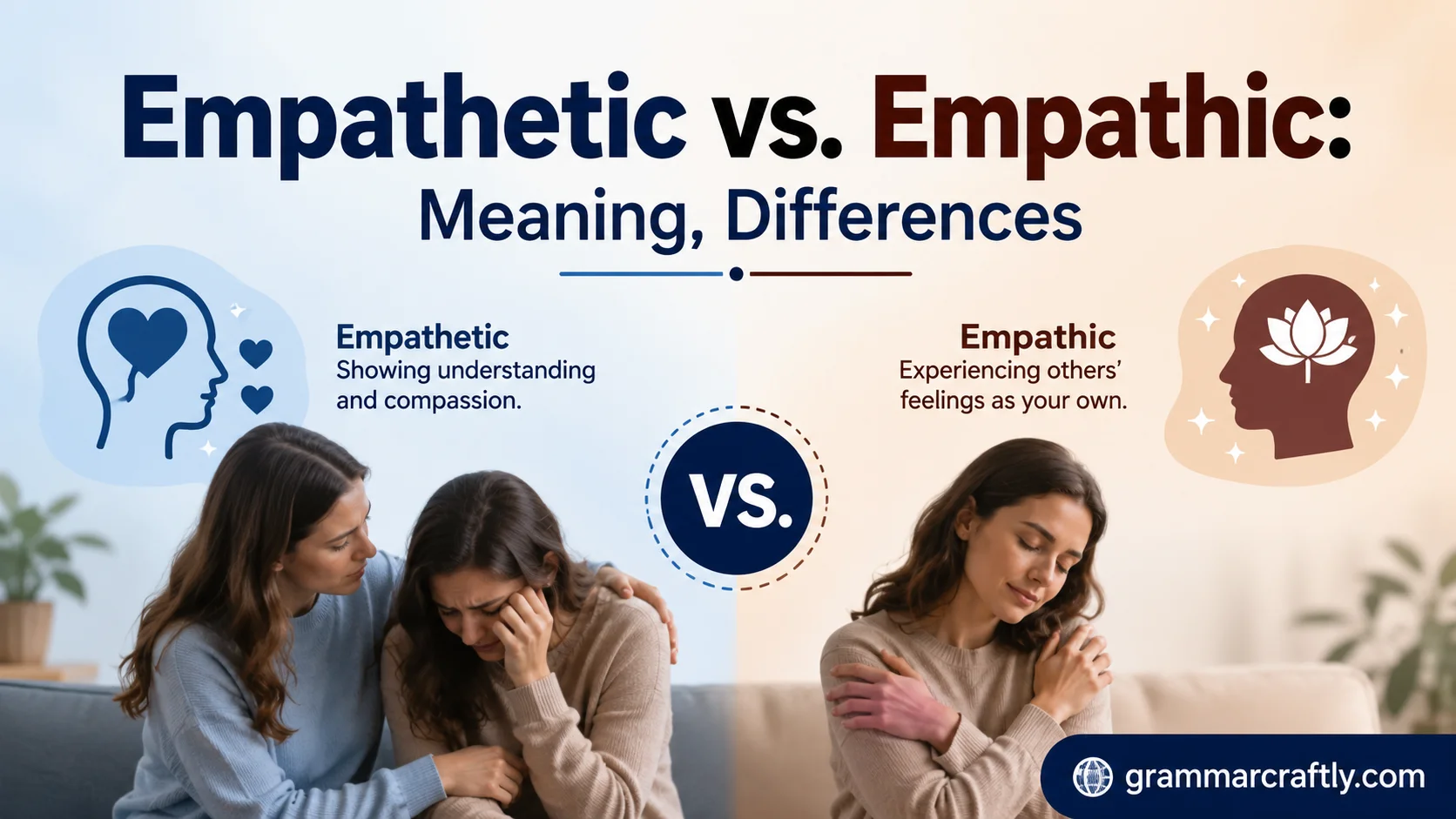
Empathetic vs. Empathic: Meaning, Differences can confuse writers because both words stem from empathy and often appear as synonyms.
Both Empathetic and Empathic are adjectives connected with empathy, understanding, and the ability to recognize other people’s emotions. Empathetic often describes someone who can put yourself in their shoes, understand how they feel, and respond with care. Empathic can describe a direct emotional connection and is commonly found in formal, scientific, and psychology-related contexts. The two terms are largely interchangeable, although their usage, meaning, and tone can have subtle nuances. For writers, editors, psychologists, and English speakers, recognizing this distinction can sharpen writing, improve tone, and communicate intention without guesswork.
A real-world example involves Malcolm in Atlanta, who was puzzled by a news story describing rats as empathic. His science-fiction ear connected the word with an empath, a person with an uncanny ability to sense others’ feelings. That reaction shows why Empathic may sometimes suggest a science-fiction noun, even though its ordinary meaning relates to having empathy. Empathic is also the older form, while empathetic may sound more natural to many speakers today. Related language material includes a transcript, empathic painting, Dictionary references, Emotions, Empathy, spelling, and synonym discussions, along with South African Slang, “Shot” for agreement, approval, or sympathy, and other Segments. These examples reinforce that context matters more than forcing a strict distinction.
“Let’s dive in”
Empathetic vs. Empathic: Quick Answer
The simplest explanation is:
| Word | Meaning | Common Usage |
| Empathetic | Showing empathy or demonstrating an ability to understand another person’s feelings | Everyday conversations, relationships, workplaces |
| Empathic | Having the ability to understand another person’s emotional state | Psychology, counseling, formal writing |
Both words describe someone who can recognize and understand emotions. The main difference is not meaning but usage and tone.
For example:
- She was empathetic when her friend lost her job.
- The therapist used an empathic approach during the counseling session.
Both sentences are correct. The first sounds more natural in everyday speech, while the second sounds more professional.
What Does Empathy Mean?
Before comparing empathetic vs. empathic, it helps to understand the word they come from: empathy.
Empathy is the ability to understand and share another person’s feelings. It means putting yourself in someone else’s position and seeing a situation from their perspective.
Imagine your friend fails an important exam. Sympathy might make you say:
“I’m sorry that happened.”
Empathy goes deeper:
“I understand how disappointing this feels. You worked hard, and I can see why you’re upset.”
Empathy does not mean you have experienced the exact same situation. Instead, it means you can recognize another person’s emotions and respond with understanding.
Psychologists often describe three main types of empathy:
| Type of Empathy | Meaning | Example |
| Cognitive empathy | Understanding another person’s thoughts and perspective | A manager understands why an employee feels stressed |
| Emotional empathy | Sharing or feeling another person’s emotions | Feeling sadness when someone tells you about a loss |
| Compassionate empathy | Understanding feelings and taking action to help | Offering support after noticing someone is struggling |
Both empathetic and empathic connect to these ideas.
What Does Empathetic Mean?
Empathetic describes someone who shows empathy through their words, actions, or behavior.
When someone is empathetic, they don’t simply notice emotions. They respond in a caring and understanding way.
For example:
- An empathetic friend listens without interrupting.
- An empathetic teacher notices when a student feels overwhelmed.
- An empathetic leader considers employees’ concerns before making decisions.
The word is especially common in everyday English because it feels natural and personal.
Examples of Empathetic in Sentences
- My doctor was empathetic and listened carefully to my concerns.
- She gave an empathetic response instead of judging him.
- A good parent tries to be empathetic when a child struggles.
- The customer service representative was empathetic about my problem.
In each example, the focus is on showing understanding and care.
What Does Empathic Mean?
Empathic also means having the ability to understand another person’s emotions or experiences.
However, it often appears in more formal settings, especially psychology, healthcare, education, and research.
Professionals may use “empathic” when discussing emotional awareness as a skill or approach.
For example:
- The counselor created an empathic environment for patients.
- Doctors need empathic communication skills when treating patients.
- The study examined empathic responses among healthcare workers.
The word often sounds more technical because it focuses on the ability or process of understanding emotions.
Read More: Continuing Success or Continued Success:
Empathetic vs. Empathic: The Key Differences
Although these words overlap, subtle differences exist.
| Feature | Empathetic | Empathic |
| Meaning | Showing empathy toward others | Having the ability to understand emotions |
| Tone | More conversational | More formal or academic |
| Common Areas | Daily conversations, relationships, workplaces | Psychology, therapy, research |
| Focus | Behavior and response | Ability and understanding |
| Popularity | More commonly used today | Less common but still correct |
Think of it this way:
- Empathic describes the emotional ability.
- Empathetic often describes the emotional action.
A person can have an empathic understanding of someone’s feelings and give an empathetic response afterward.
Are Empathetic and Empathic Interchangeable?
In most situations, yes.
Native speakers often use them interchangeably because their meanings overlap so much.
For example:
- He is an empathetic person.
- He is an empathic person.
Both sentences tell us that the person understands others’ emotions.
However, some contexts naturally favor one word.
Everyday Writing
Use empathetic when talking about people, relationships, or personal experiences.
Example:
“My sister was incredibly empathetic when I was going through a difficult time.”
This sounds natural and friendly.
Professional Writing
Use empathic when discussing methods, skills, or professional practices.
Example:
“The nurse demonstrated empathic communication during patient interviews.”
This sounds more aligned with healthcare or psychology.
Empathetic vs. Empathic vs. Sympathetic: Understanding the Difference
Many people confuse empathy with sympathy. Although they are related, they are not the same.
| Word | Meaning | Example |
| Empathy | Understanding another person’s feelings | “I understand why this situation hurts you.” |
| Sympathy | Feeling concern for someone’s difficulty | “I’m sorry you’re experiencing this.” |
| Compassion | Understanding suffering and wanting to help | “How can I support you?” |
A simple way to remember:
Sympathy feels for someone. Empathy feels with someone. Compassion acts for someone.
Real-Life Examples of Empathetic and Empathic Usage
Understanding examples makes the difference much clearer.
In Friendships
Imagine your friend tells you they feel lonely after moving to a new city.
An empathetic response might be:
“Moving away from familiar people can feel really difficult. I understand why you miss home.”
The response recognizes the emotion instead of dismissing it.
In Healthcare
Healthcare professionals often need strong emotional awareness.
An empathic doctor does more than diagnose symptoms. They understand that patients may feel scared, confused, or overwhelmed.
For example:
A patient waiting for test results might need reassurance and patience, not just medical information.
In Leadership
Modern workplaces value empathy because employees want leaders who understand their challenges.
An empathetic manager might notice:
- An employee is experiencing burnout.
- A team member needs additional support.
- Workplace stress is affecting performance.
Instead of immediately criticizing results, the manager considers the person behind the work.
Why Empathy Matters in Communication
Empathy improves the way people connect with each other.
Research in psychology and communication shows that empathetic interactions can strengthen relationships, improve teamwork, and reduce conflicts.
Empathy helps you:
- Build trust.
- Listen more effectively.
- Understand different viewpoints.
- Handle disagreements calmly.
- Create stronger relationships.
A conversation changes when people feel heard.
Compare these two responses:
Less helpful:
“You shouldn’t feel that way.”
More empathetic:
“I can understand why you feel that way. Let’s talk about what happened.”
The second response creates connection.
Common Mistakes With Empathetic and Empathic
Even though these words are simple, people often misuse them.
Mistake: Thinking One Word Is Incorrect
Some writers assume “empathic” is wrong because “empathetic” feels more familiar.
That isn’t true. Both words are recognized English adjectives.
Mistake: Confusing Empathy With Agreement
Being empathetic does not mean you agree with everything someone believes.
You can understand someone’s feelings without sharing their opinion.
Example:
“I understand why you’re frustrated, even though I see the situation differently.”
Mistake: Using Empathy and Sympathy as the Same Thing
These words overlap but have different meanings.
Someone offering sympathy may feel sorry for another person. Someone showing empathy tries to understand their emotional experience.
How to Remember the Difference Between Empathetic and Empathic
A simple memory trick:
Empathic = emotional ability
Empathetic = emotional action
Think:
- “I have an empathic understanding.”
- “I gave an empathetic response.”
The first describes a skill. The second describes behavior.
Which Word Should You Use?
If you’re unsure, empathetic is usually the safer choice in everyday writing.
Use:
✅ Empathetic for:
- Conversations
- Blog posts
- Personal writing
- Describing people
Use:
✅ Empathic for:
- Academic writing
- Psychology discussions
- Professional communication
- Research contexts
However, you won’t make a serious mistake by choosing either one.
FAQs:
1. What is the difference between empathetic and empathic?
Empathetic and empathic both mean showing or having empathy. They are usually interchangeable, although empathetic often sounds more natural in everyday English, while empathic may appear more often in formal, scientific, or psychology-related contexts.
2. Is empathetic or empathic more common?
Empathetic is generally more common in modern everyday English. However, empathic is an older form and remains correct, especially in academic, scientific, and psychological writing.
3. Is empathic a correct word?
Yes. Empathic is a standard and correct English adjective. It describes someone or something connected with empathy or the ability to understand another person’s feelings.
4. Can empathetic and empathic be used interchangeably?
Yes, in most situations. Both words describe empathy and emotional understanding. Your choice mainly depends on context, tone, and which form sounds more natural in the sentence.
5. Which should I use in professional writing?
For most professional writing, empathetic is a safe and natural choice. However, empathic is also appropriate, particularly in scientific, academic, or psychology-related contexts where it may sound more precise or established.
Conclusion:
The difference between empathetic vs. empathic is mainly a matter of usage, history, and context rather than meaning. Both words describe emotional understanding and empathy. Empathetic tends to sound more natural in everyday and professional communication, while empathic remains completely correct and is often associated with formal or scientific language. When you’re choosing between them, consider your audience, the tone of your writing, and the context. In most cases, either word will communicate the idea clearly.